Blog
Future-proofing
New business models
Wholesale Monetization
FiberCo
Fiber Enablement
Telco


Alen Muslić
Chief Innovation Officer
From a skyrocketing demand for data to the arrival of new technologies such as 5G, edge compute and large-scale AI, the telecoms industry has been through rapid transformation over the last few years. Communications Service Providers (CSPs) now face a dual pressure: to serve higher traffic and new enterprise use cases, and to adapt commercially as hyperscalers and cloud players expand deeper into the telco value chain.
This is not just to meet the needs of their existing customers, but with Hyperscalers like Meta and Google eyeing traditional CSP territory, evolution is essential to ensure they are not displaced. One of the biggest drawbacks for CSPs looking to adapt to the new landscape is the limitations of their existing IT infrastructure. Legacy systems lack the agility needed to embrace new business models that are an essential part of staying competitive.
In this article, Alen Muslić, Chief Innovation Officer at ZIRA, reviews the drivers for change across the industry, explores the IT infrastructure upgrades needed, and looks at the essentials for ongoing wholesale success.
Drivers for change
Before we look at how CSPs should change their infrastructure, we first need to understand why. With a clear picture of the market drivers, we can fully understand the scope of the changes necessary to stay competitive.
Let’s start with fiber, one of the biggest near-term revenue opportunities. Analysys Mason's fiber research and European market studies have documented a rapid shift in FTTP build and ownership structures, with a growing share of build and roll-outs being driven by alternative operators, carve-outs and specialized wholesale players. Incumbents that keep legacy, rigid stacks will struggle to compete where new entrants have been designed from the ground up for wholesale-first models.
Capitalizing on wholesale fiber opportunities is one significant factor in ensuring new market entrants do not eat into CSPs’ market share. However, the threat of displacement is not the only driver for change. For many CSPs, the opportunities that come with evolution are a greater motivation.
Growth in adjacent digital consumer markets, gaming, online video, smart home and digital music, creates a large addressable opportunity for CSPs. Omdia’s market work (2023) estimated these fast-growing segments could be worth roughly $0.5 trillion by 2027, highlighting the case for CSPs to partner with hyperscalers and platform players rather than treat them solely as competitors. Operators that lack flexible wholesale and BSS capabilities will find it harder to monetize these markets.
Here, Hyperscalers like Amazon, Apple, Google, and Meta have the potential to enhance rather than threaten CSP businesses through wholesale partnerships. Jonathan Doran, principal analyst, Omdia, states, “Developing partnerships with such players is not only more pragmatic but will also serve to strengthen their own products and brands.” To make the most of these opportunities, however, CSPs must have in place an IT infrastructure that can support new wholesale strategies.
Current stack limitations
The real cost of legacy stacks is not just integration effort but time-to-market. In fast-moving segments (e.g., bundled digital services or wholesale fiber offers), slow release cycles, brittle integrations and data silos directly translate to lost deals and missed partnerships. A wholesale-capable stack must allow rapid partner onboarding, product experimentation and automated partner settlement, otherwise incumbents will be outflanked commercially.
The sluggishness of legacy systems when it comes to delivering new services and features delays time-to-market, a critical factor in a competitive industry that thrives on rapid innovation. Plus, trying to integrate modern platforms and applications into legacy systems often causes more problems than it solves, leading to data silos and inefficiencies that prevent CSPs from capitalizing on the opportunities they are looking to pursue.
Instead, CSPs need to look to a system that can deliver the agility and flexibility they need to thrive.
Unlocking all opportunities
A combination of the drivers for change and the current stack limitations demonstrates just how crucial it is for CSPs to embrace an alternative. Change is essential. But ensuring the agility to unlock all potential business opportunities from whatever system is introduced is even more important.
There are four considerations for CSPs when looking to implement a system that maximizes revenue opportunities:
1. Retail and wholesale ready
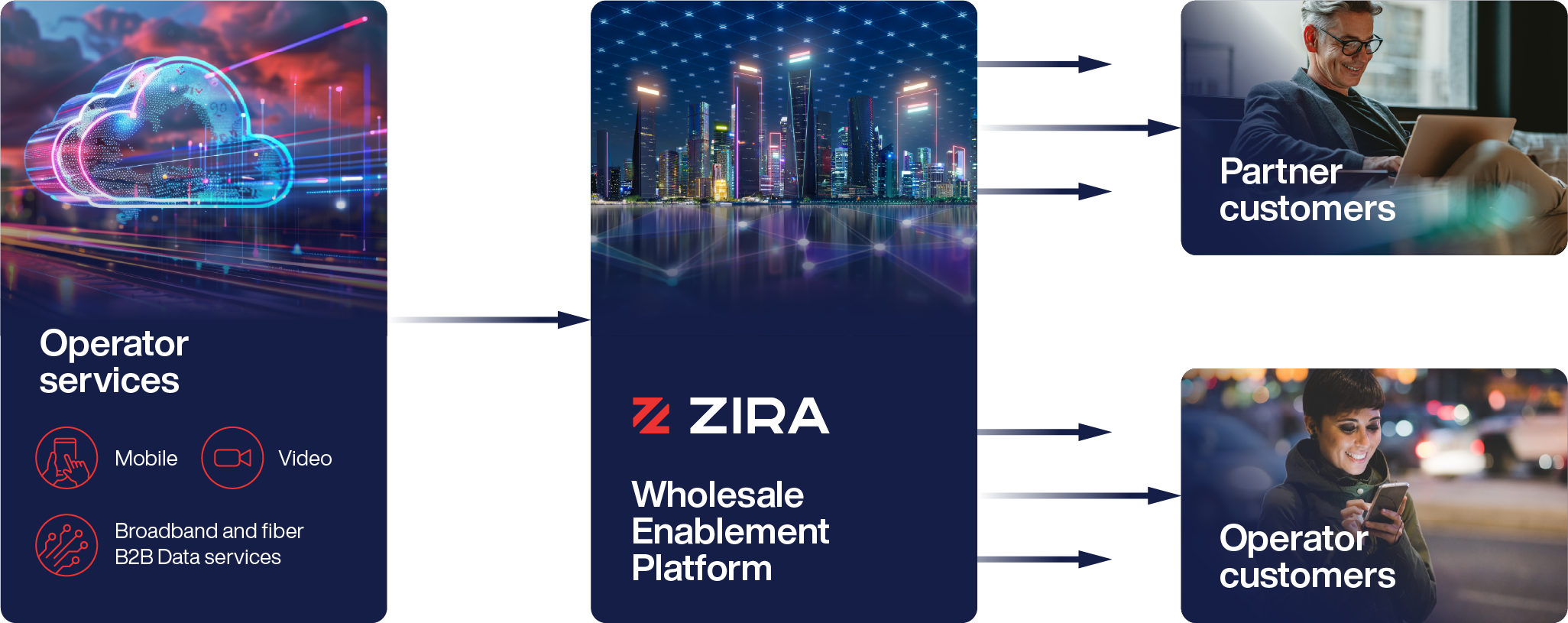
The very best retail BSS is not necessarily able to cater to wholesale needs. Enterprise architects often favor a one stack fits all approach. In practice, if it is not fully addressing wholesale needs, CSPs are left with similar limitations to those they experience with legacy systems. When it comes to designing the IT stack, wholesale should be treated as an independent, autonomous unit to ensure businesses do not cut off the full range of opportunities accessible to them.
2. Covers all business segments
CSPs have a diverse range of services and a unique approach to implementing them. A lot of IT stacks maintain a sole focus on telco products. To take advantage of new opportunities as they continue to arise, CSPs need to work with a provider that can cater to their specific IT needs across all business segments.
3. Future-proof agility
Having an IT stack that gives agility to move with market trends is an essential part of any CSP’s strategy. In terms of achieving this, a Cloud Native modular approach gives maximum flexibility for an operator to differentiate their offering and quickly adjust it to their changing needs. For many operators, adopting an Open Digital Architecture (ODA) approach, component-based, API-first, cloud-native modules guided by TM Forum standards, is the pragmatic route to future-proof agility. ODA lowers integration friction, simplifies proofs-of-concept with partners and accelerates the ability to launch new wholesale products.
4. Supports new business models
When it comes to maximizing revenues, partnerships are key – whether to expand the volume of opportunities for selling fiber services or to tap into new markets like gaming and online video. Managing the number of complex partnerships that will be part of a modern CSP’s business is potentially challenging. Therefore, an infrastructure that supports new models for wholesale partnerships is vital.

Conclusion
Implementing BSS systems that truly support wholesale models is a commercial imperative in 2025: higher traffic volumes, growing demand for differentiated connectivity, and a richer partner ecosystem mean operators must be both operationally efficient and commercially flexible. ZIRA helps CSPs modernize to modular, wholesale-ready stacks, reducing time-to-market for new offers and making partnerships a revenue driver rather than a source of friction. Learn more about practical steps CSPs can follow in our ABC of partnership enablement.
Empowering Partnerships with ZIRA’s ABCDE