Blog
Fiber Enablement
FiberCo
BSS
Order Management

ZIRA Group
Telco Titans blog summary
Africa is entering an important phase of digital transformation. Billions are being invested in fiber infrastructure, subsea connectivity, data centers and digital platforms. Yet turning network capacity into a business that partners can actually use takes more than infrastructure. Africa is building the networks and now comes the harder part: making them work as businesses.
Fiber networks, subsea cables, data centers, and digital infrastructure are expanding across the continent, but while network coverage creates opportunity, commercial readiness determines how effectively operators can turn that opportunity into services, customers, and revenue. For wholesale operators and FiberCos, that distinction matters. A network can be technically ready for service long before the business is ready to sell it.
When more fiber means more business complexity
Wholesale and open-access fiber models offer a compelling proposition: one infrastructure network, multiple service providers, and more opportunities to generate value from deployed capacity. However every new partner, brings another layer of commercial complexity. For example, an ISP wants to launch services over a FiberCo’s network. Before the first customer can be connected, the provider needs to know where services are available, what products it can offer, which prices and agreements apply, and how orders will be fulfilled. Once service go-live, billing. service management, and partner support must work just as reliably. Multiply that across dozens of partners, products, and coverage areas, and the challenge becomes clear. The real test isn’t just how quickly a FiberCo can expand its network, but how easily it can do business over that network.
One continent, different rules of business
There's no single playbook for Africa's fiber markets. In South Africa, prepaid fiber and voucher-based offers are helping providers reach customers whose purchasing patterns may not fit traditional monthly subscriptions. Subsequently, this creates new requirements for product configuration, payments, and distribution. In Kenya, mobile-first behavior and digital payments shape how broadband services are bought and used.
These are different market realities, but they expose the same underlying requirement: commercial operations must be able to adapt.A business model that works in one market cannot simply be copied into another. And every new proposition shouldn't require another round of system customization. As Emir Bukvić, CEO of ZIRA Group, explains:
African operators and FiberCos are often creating models for local conditions rather than copying established markets elsewhere. The systems underneath have to be flexible enough to support that innovation.

The commercial systems behind scalable fiber businesses
Supporting these diverse operating models requires more than traditional network management. FiberCos and wholesale operators need four essential capabilities:
- End-to-end fiber processes: Connecting commercial operations with network planning, ordering, fulfilment and service management.
- Wholesale partner enablement: Supporting partner onboarding, multi-party ordering, product access and transparent commercial relationships.
- Open integration: Connecting systems, networks and external partners through open APIs and interoperable architecture.
- Commercial scalability: Enabling new products, services, partners and revenue models without introducing additional operational complexity.
Modern Business Support Systems (BSS), modular architectures and open APIs provide the foundation for these capabilities. Importantly, transformation does not necessarily mean replacing every legacy platform. It means introducing the right capabilities to remove bottlenecks and support business growth.
Lessons beyond Africa: Virgin Media Ireland experience
International experience offers valuable lessons. Virgin Media Ireland's transition from coaxial cable towards FTTH and XGS-PON illustrates how network transformation creates new wholesale business requirements.
Developing its wholesale fiber proposition required more than network upgrades. It involved establishing new commercial workflows, partner access, product catalogs, automated fulfilment and integrations with workforce management, GIS and incident systems. Self-service capabilities and TM Forum Open API access further enabled retail partners to participate in the wholesale ecosystem. The experience demonstrates how a flexible BSS foundation can help operators move from infrastructure deployment to an operational, multi-partner wholesale business. As ZIRA Group's Chief Product Officer, Amir Turalić, highlights:
A fiber network is not automatically a wholesale business. The commercial foundations have to be built to support growth.
The next fiber revolution is commercial
Africa's digital future will depend not only on how much connectivity infrastructure is deployed, but on how effectively that infrastructure is commercialized. For operators, FiberCos, investors and digital-service providers, the competitive advantage will increasingly come from the ability to launch services faster, onboard partners efficiently, adapt to local market conditions and generate sustainable revenue from network capacity.
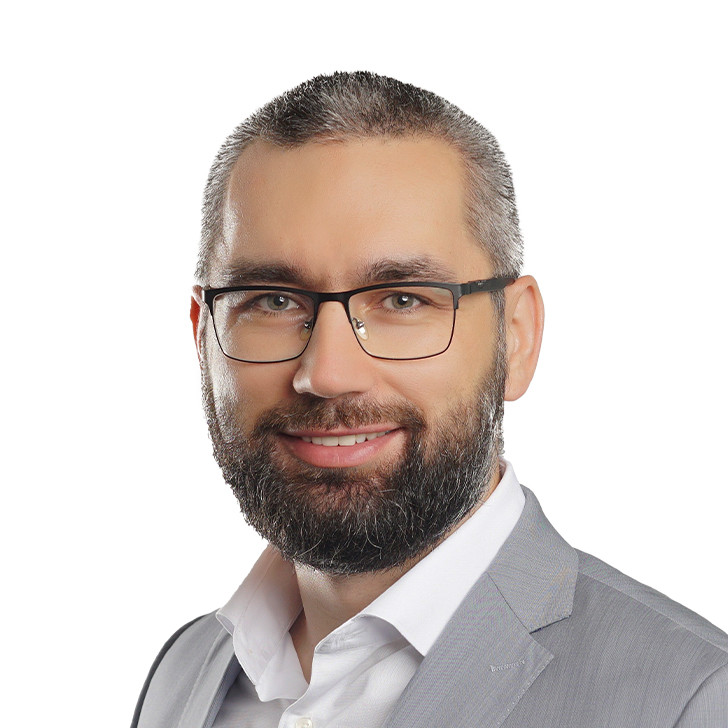
The next phase of fiber growth requires infrastructure and commercial capabilities to evolve together. Networks must become easier to access, products easier to buy, partners easier to integrate and operations easier to scale. As Emir Bukvić, CEO of ZIRA Group, emphasizes:
The ability to scale the commercial side of the business as quickly as the network will be central to turning infrastructure investment into sustainable growth.
Ultimately, the winners of Africa's fiber revolution will not simply be those who build the most kilometers of fiber, but those who build the commercial ecosystems that make every kilometer count.

Telco Titans blog:
Africa’s fibre boom needs a commercial operating model — not just more network
Read more