Blog
Artificial Intelligence (AI)
Digital transformation
ODA
Open API
BSS


Anel Hero
Software Engineering Director
AI is becoming an indispensable engineering assistant, but the responsibility for architecture, software quality, cybersecurity, and customer trust will always belong to experienced engineers.
Artificial intelligence has become the most disruptive force in software engineering since the emergence of cloud computing. Every week introduces another AI coding assistant, autonomous development agent, or promise of "fully automated software development." Yet inside organizations responsible for building mission-critical software powering millions of telecom subscribers the conversation is very different. Used responsibly, AI accelerates innovation, and used carelessly, it accelerates technical debt. The difference lies not in the technology, but in the engineering discipline surrounding it.
AI is changing software development, but not the way many think
Software engineering has always evolved through abstraction. Assembly language became C, C became Java, virtual machines became containers, and cloud platforms replaced physical infrastructure. Today, AI is becoming the next abstraction layer. Developers are spending less time writing repetitive boilerplate code and more time designing systems, validating architecture, solving business problems, and ensuring software behaves predictably under real-world conditions.
This shift is particularly important in telecom. Unlike consumer applications, telecom BSS platforms operate some of the most complex software ecosystems in the enterprise world. Each subsystem influences dozens of others. Generating code is only a small part of building these systems.
Understanding the architecture is what matters.
AI can write code, but cannot understand your business
One misconception surrounding AI-assisted development is that generating working code equals generating good software. Modern AI coding assistants typically operate at the function, file, or repository level. They rarely understand why architectural decisions were made years ago. They do not understand your product strategy. They cannot evaluate long-term maintainability. They cannot fully understand customer-specific business rules developed through years of implementation experience. This is why engineering judgment has become even more valuable in the age of AI.
The modern AI engineering stack
Professional software organizations no longer rely on a single AI assistant. Instead, AI has become an integrated engineering ecosystem.
Today's development teams typically combine:
- Editor-level copilots for intelligent code completion and refactoring
- Agent-based assistants capable of decomposing development tasks and generating pull requests
- Repository-aware assistants that understand large codebases and automate migrations
- AI integrated into CI/CD pipelines for automated test generation, vulnerability detection, performance optimization, and quality analysis
- AI-assisted product discovery that helps identify edge cases, acceptance criteria, and specification gaps before development even begins.
This layered approach fundamentally changes developer productivity. However, productivity over quality should never become the primary objective.
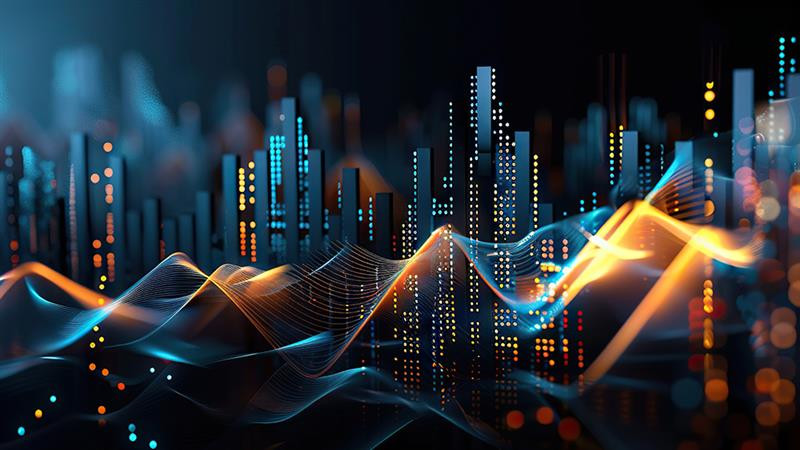
The AI-powered future of BSS for wholesale telcos
Find out more about the power of AI in telecom forecasting and how the ZIRA solution can deliver a competitive edge in our latest e-book
Explore moreLow-code, no-code, and AI: A new development paradigm
By 2026, low-code and no-code platforms have matured far beyond simple workflow automation. Enterprise organizations are now building sophisticated internal applications using visual development environments enhanced with AI-generated logic. This is changing the role of professional software engineers. Rather than spending weeks implementing repetitive CRUD functionality, engineering teams increasingly focus on:
- platform architecture
- integration strategy
- distributed systems
- scalability
- performance optimization
- API design
- security engineering
In other words, engineers move closer to solving business problems while AI handles much of the repetitive implementation work. The future belongs to engineers who design systems and not simply write code.
Security cannot be an afterthought in the AI era
From a cybersecurity perspective, AI introduces tremendous opportunities and equally significant risks. Generative AI can produce secure code. It can also generate insecure code at unprecedented speed. That is why cybersecurity by design has never been more important.
At ZIRA, secure software development starts with architecture: encryption, authentication, authorization, secure APIs, identity management, threat modeling, and compliance. These are not features added before production, rather architectural decisions made from day one. Security must become part of every engineering conversation, an integral part of software design itself.
Secure coding standards must live inside the developer workflow
Secure coding standards are only effective when they are part of the developer's daily workflow, not buried in documents that few revisit. As AI becomes integral to software development, security must shift left and be embedded from the very first line of code. AI-assisted development environments can identify insecure coding patterns, exposed secrets, vulnerable dependencies, and API risks in real time, enabling developers to address issues before they reach production.
This is equally true for DevSecOps. As telco software teams deliver new features continuously, manual security reviews alone no longer scale. Security testing must be automated throughout the CI/CD pipeline, using AI to generate test cases, detect vulnerabilities, identify performance regressions, and strengthen code quality. By automating routine analysis, AI allows cybersecurity experts to focus on higher-value activities such as architecture reviews, threat modeling, and protecting increasingly complex digital ecosystems. AI does not replace cybersecurity professionals, it amplifies their expertise, making security a continuous engineering practice rather than a final checkpoint.
The most effective security control is the one developers barely notice because it is seamlessly integrated into their daily workflow.
The future belongs to AI-augmented engineering teams
Looking ahead, we believe software development will become increasingly collaborative between humans and AI. Routine implementation will continue to be automated. Testing will become more intelligent. Documentation will largely generate itself. Security analysis will happen continuously. Architecture reviews will increasingly leverage AI reasoning. Yet one principle will remain unchanged.
In reality, customers buy reliable software, and reliable software is built by disciplined engineering teams who understand architecture, business processes, security, and operational resilience. AI is becoming one of the greatest productivity accelerators our profession has ever seen. But productivity without engineering discipline simply creates technical debt faster. The organizations that succeed over the next decade will not be those using the most AI. They will be those that combine AI with deep engineering expertise, cybersecurity by design, and a relentless commitment to software quality.
Because in the end, the future of software engineering will be defined by how wisely we use AI. The organizations that lead tomorrow will be those that combine AI with human ingenuity, engineering discipline, and security by design. They will be building software that is not only faster to develop but also trusted to power the world's most critical digital infrastructure.